80s Leather Jacket: Styles, Condition Checks, Sizing and Care
80s Leather Jacket: Styles, Condition Checks, Sizing and Care
An 80s leather jacket is one of the few vintage pieces that can last a lifetime. The leather softens, the shape develops character, and the style still works with jeans, dresses, and tailoring. But vintage leather also ages in ways that can catch buyers out: dry patches, cracked surfaces, peeling linings, and fits that do not match modern sizing.
This guide focuses only on 1980s leather jackets: the main styles, the leather types and finishes, what to check before you buy, how to size one, how to style it, and how to clean and care for it.
Read More: https://vintike.com/blog/vintage-clothing/60s-dress
Why the 80s Leather Jacket Is So Popular
Built to Last
Real leather is durable. A well-kept jacket from the 1980s can still be fully wearable today.
A Look That Never Left
Leather jackets have been a part of rock, street, and everyday style for decades, so an 80s piece rarely feels dated.
Bold, Oversized Shapes
The 1980s favoured roomy cuts, strong shoulders, and statement details, which suit current relaxed and oversized trends.
Gets Better With Age
Good leather develops a soft, worn-in finish that new jackets try to imitate.
Sustainable Choice
Wearing an existing jacket keeps it in use and reduces demand for new production.
Popular 80s Leather Jacket Styles
Biker Jackets
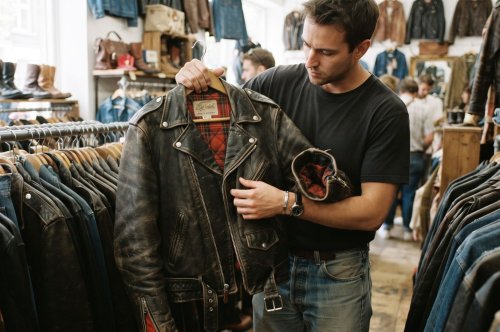
Asymmetric zip, wide lapels, belted waist, and zip pockets. Rock and rebellion in jacket form.
Bomber Jackets
Short, boxy, with ribbed cuffs and hem. Easy to wear and very versatile.
Oversized and Boxy Jackets
Roomy cuts with dropped shoulders, often with shoulder pads, typical of the decade.
Cropped Jackets
Short in the body and sometimes fitted, popular with women’s fashion of the period.
Blouson Jackets
Gathered at the waist or hem, creating a soft, rounded shape.
Café Racer Style
Slim, simple jackets with a minimal collar and clean lines.
Longline and Trench-Style Leather Coats
Longer leather coats with belts and structured shoulders, often seen in the power-dressing era.
Colour and Detail Variations
Most are black or brown, but the decade also produced burgundy, tan, grey, and brighter shades, plus panelled, quilted, and studded designs.
Leather Types and Finishes
Always read the label and description, since terms vary between sellers.
Cowhide
Strong and thick, common in biker jackets. It can feel stiff at first, but ages well.
Lambskin
Softer and lighter, often used for fashion and fitted styles. It is more delicate and can show scuffs more easily.
Goatskin
Durable and supple with a distinctive grain.
Suede and Nubuck
Soft, napped surface. Beautiful, but harder to clean and more sensitive to water and stains.
Faux Leather and Synthetic Materials
Man-made materials were common in the 1980s. They can look convincing, but age differently from real leather and often peel or crack.
How to Tell Real Leather From Faux
No single clue is enough. Check several signs together.
- Feel: real leather usually feels warm and has small natural variations. Faux often feels cooler, smoother, and more uniform.
- Grain: real leather has irregular grain. A perfectly repeating pattern can suggest faux.
- Edges and the inside: real leather often has a fibrous, suede-like back at cut edges. Faux often shows fabric backing.
- Smell: real leather has a distinctive smell, though old pieces may have other odours. Faux can smell chemical.
- Wear pattern: real leather tends to crease, soften, and darken. Faux often peels, flakes, or splits in sheets.
- Label: check the care label and any material statement.
When in doubt, ask the seller for close-up photos of the edges, lining, and label.
How to Check the Age of an 80s Leather Jacket
Labels and Tags
Look at the logo, font, layout, and care label. Compare them with reliable references for the period. Very old or home-made jackets may have no label.
Zips and Hardware
Metal zips, snaps, and buckles are common. Hardware can be replaced, so use it as one clue only.
Lining
Check the lining fabric and finishing. Many 80s jackets have nylon, polyester, or quilted linings, and some have name tags or labels sewn in.
Shoulder Pads
Some 1980s jackets contain shoulder pads. They can add to the authentic shape, but may crumble with age.
Cut and Shape
Boxy bodies, strong shoulders, and generous sleeves suggest the era, though some modern jackets copy these shapes.
Wear and Patina
Natural aging shows around the cuffs, collar, elbows, and pockets. Evenly distressed jackets with no logical wear can be modern pieces.
Price
A rare, high-quality jacket priced very low deserves extra questions. A modern copy priced like a collectible should be avoided.
Condition Problems to Check in Vintage Leather
Leather does not age like cotton, so inspect these areas closely.
Dryness and Cracking
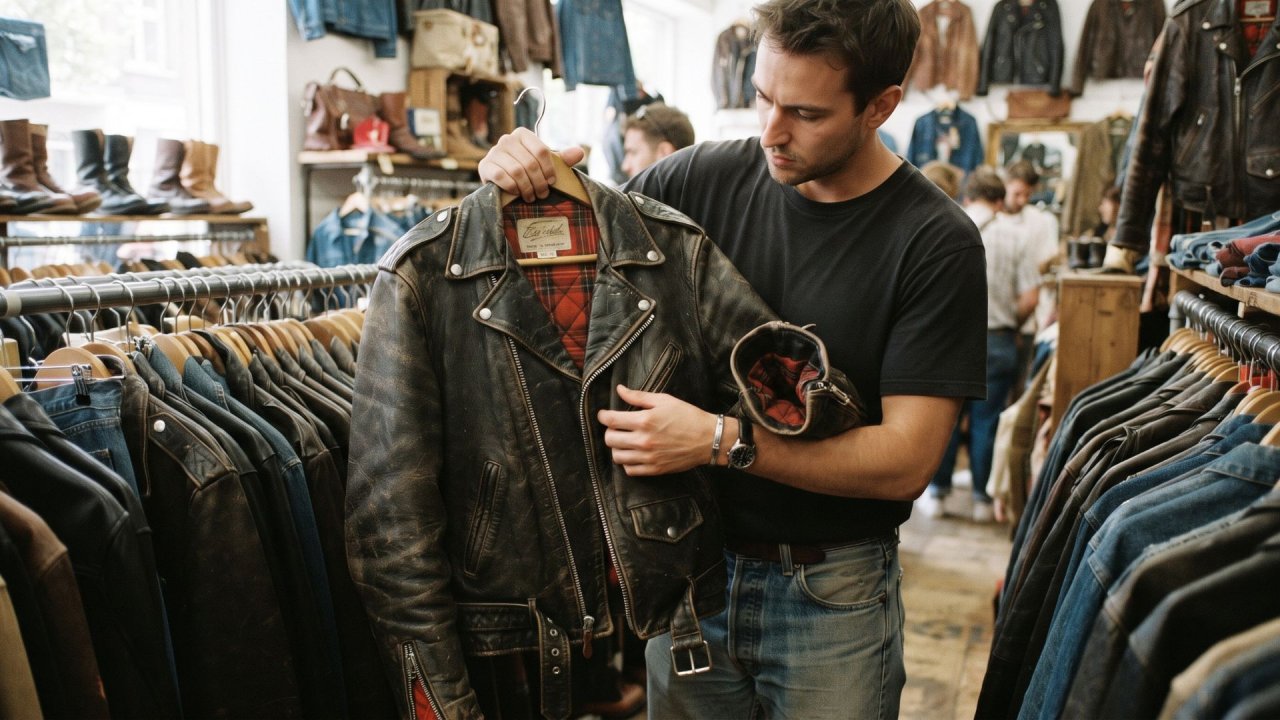
Look for fine cracks across the surface, especially at the shoulders, elbows, and collar. Light creasing is normal, but deep cracks and flaking are serious.
Peeling or Flaking Surface
This is more common on coated leather and faux leather. Once it starts, it is hard to repair.
Stiffness and Shrinkage
Overly dry leather can feel stiff or tight. This may limit comfort and fit.
Lining Damage
Torn, stained, or peeling linings are common. Replacing a lining is possible, but it can be expensive.
Zips
Test the main zip and all pocket zips. Check for missing teeth, sticking, or a worn zip pull.
Seams and Stitching
Check shoulders, underarms, pockets, and cuffs for split seams or loose stitching.
Stains and Marks
Oil, water marks, and ink can be hard to remove, especially on suede.
Smell
Stored leather can hold musty, smoky, or sweaty smells. Airing helps, but strong odours can be permanent.
Mould
Look for white or green spots, particularly inside the lining and in creases.
How to Choose the Right Size
Use Measurements, Not Labels
Sizing has changed since the 1980s. Compare the listed measurements with a jacket you own and like.
Measurements That Matter
- Chest (pit to pit): measured flat across the chest.
- Shoulder width: crucial for leather, since it does not stretch easily.
- Sleeve length: from shoulder seam to cuff.
- Body length: from collar to hem.
- Waist or hem width: especially for bomber and cropped styles.
Remember That Leather Moulds to You
New leather can be stiff, but with wear it softens and shapes to your body. Choose a fit that is comfortable across the shoulders, and allow room for layering.
Oversized by Design
Many 80s jackets are meant to be roomy. Check the description for fit notes.
If You Are Between Sizes
A slightly larger size is usually easier to wear than one that is too tight, since leather is difficult to let out.
How to Style an 80s Leather Jacket
Casual Look
A biker or bomber with a plain tee, straight-leg jeans, and boots.
Smart Casual Look
A neat leather jacket over a collared shirt with tailored trousers.
Dress Contrast
A leather jacket over a floral or silky dress, with ankle boots, for a mix of soft and tough.
Layered Winter Look
A roomy leather jacket over a knit or hoodie, with a scarf.
Retro 80s Look
An oversized jacket with high-waisted jeans, a graphic tee, and chunky shoes.
Styling Rule
Let the jacket be the statement. Keep the rest of the outfit simple and well fitted.
How to Clean and Condition Vintage Leather
Always Test First
Try any cleaner or conditioner on a hidden spot, such as the inside of a hem.
Wipe Gently
Use a soft, slightly damp cloth for light dirt. Avoid soaking the leather.
Use Products Made for Leather
Choose a leather cleaner and conditioner suitable for the type of leather. Avoid household cleaners.
Condition Sparingly
Apply a thin, even layer, allow it to absorb, and wipe away any excess. Too much conditioner can darken or stain leather.
Treat Suede Differently
Use a suede brush and eraser, and avoid regular leather conditioners.
Air Out Odours
Hang the jacket outdoors in shade, or in a well-ventilated room. Avoid direct heat and sunlight.
Use a Specialist for Valuable or Damaged Jackets
A leather specialist can repair cracks, replace zips, and re-line jackets where needed.
How to Store an 80s Leather Jacket
- Use a wide, padded hanger to support the shoulders.
- Keep the jacket in a cool, dry, ventilated space.
- Avoid plastic covers, which trap moisture. Use a breathable garment bag instead.
- Keep away from radiators, direct sunlight, and damp.
- Do not fold or compress for long periods.
Where to Buy an 80s Leather Jacket
- Online vintage stores: clear photos, measurements, and condition notes. Vintike focuses on carefully selected vintage pieces with clear descriptions, so shoppers can buy with confidence.
- Resale apps and marketplaces: large variety and competitive prices. Check reviews and ask for close-ups of the lining, zips, and leather surface.
- Vintage fairs and markets: try jackets on and inspect the leather in person.
- Thrift and charity shops: affordable, though selection varies and many jackets are unmeasured.
Tips for Buying an 80s Leather Jacket Online
- Read the full description, including material, size, and condition.
- Compare the measurements with a jacket you own, especially the shoulders.
- Zoom in on the collar, cuffs, elbows, and lining.
- Ask for close-ups of zips, edges, and any cracks.
- Check delivery time and the returns policy.
- Ask whether the jacket has been conditioned, cleaned, or repaired.
Common Mistakes When Buying an 80s Leather Jacket
- Ignoring cracks, dry patches, and peeling.
- Confusing faux leather with real leather.
- Buying by size label instead of measurements.
- Overlooking lining damage and zip problems.
- Using household products on vintage leather.
- Storing the jacket in plastic.
- Paying vintage prices for a modern copy.
FAQ's
What is an 80s leather jacket?
It is a leather jacket made in the 1980s or in a 1980s style, often with roomy cuts, strong shoulders, and details such as zips, belts, and studs.
How can I tell if a leather jacket is vintage?
Check the label, hardware, lining, cut, and wear together. No single clue is enough, so buy from sellers who can explain how they date their items.
How do I know if a jacket is real leather?
Look at the grain, edges, feel, smell, and label. Real leather has irregular grain and a fibrous edge, while faux often has a fabric backing and peels when it ages.
Can cracked leather be repaired?
Light dryness can often be improved with conditioning. Deep cracks and peeling surfaces are harder to fix and may need a specialist.
How should I clean a vintage leather jacket?
Test first, wipe gently with a slightly damp cloth, use a product suitable for the leather type, and condition sparingly. Suede needs different care.
What size should I buy?
Use the jacket’s measurements, especially shoulder width and chest, and compare them with a jacket you already own.
How do I store a leather jacket?
Use a wide padded hanger in a cool, dry, ventilated place, and use a breathable garment bag instead of plastic.
Where can I buy an 80s leather jacket online?
You can buy from online vintage stores, resale apps, and marketplaces. Choose sellers who show clear photos, measurements, and honest condition notes.
Conclusion
An 80s leather jacket is one of the best investments in vintage clothing, as long as you choose carefully. Check the leather for cracks and dryness, inspect the lining and zips, use measurements instead of size labels, and care for the jacket with products made for leather. Choose a style that suits you, wear it with simple basics, and it can last for decades.
Ready to find your next jacket? Explore the collection at Vintike and discover vintage clothing selected for style and quality.