1920s Fashion: Flapper Style, Menswear and How to Wear the Look Today
1920s Fashion: Flapper Style, Menswear and How to Wear the Look Today
The 1920s changed how people dressed. After the First World War, society moved quickly: women gained new freedoms, jazz filled the clubs, and clothing became looser, lighter, and more daring. The result was a decade of shimmering evening dresses, sharp tailoring, and accessories that still inspire designers, costume makers, and vintage lovers today.
This guide covers 1920s fashion for women and men, the fabrics, colors, and accessories that defined the era, how to build a modern 1920s-inspired outfit, and how to tell original pieces from reproductions.
Read More: https://vintike.com/blog/vintage-clothing/cheap-vintage-clothing
What Made 1920s Fashion Different?
A Break From Tight Silhouettes
Before the 1920s, women’s fashion often emphasized a defined waist and structured shapes. In the 1920s, silhouettes became straighter and looser, giving freedom of movement.
Shorter Hemlines
Skirts rose to around the knee by the middle of the decade, which was a major change from earlier long lengths.
Dancing and Nightlife
Jazz, social dancing, and nightlife shaped clothing. Garments needed to move, sparkle, and look good under lights.
Ready-to-Wear and Popular Culture
Magazines, cinema, and department stores helped spread trends faster than before, so styles reached more people.
1920s Fashion for Women
The Flapper Look
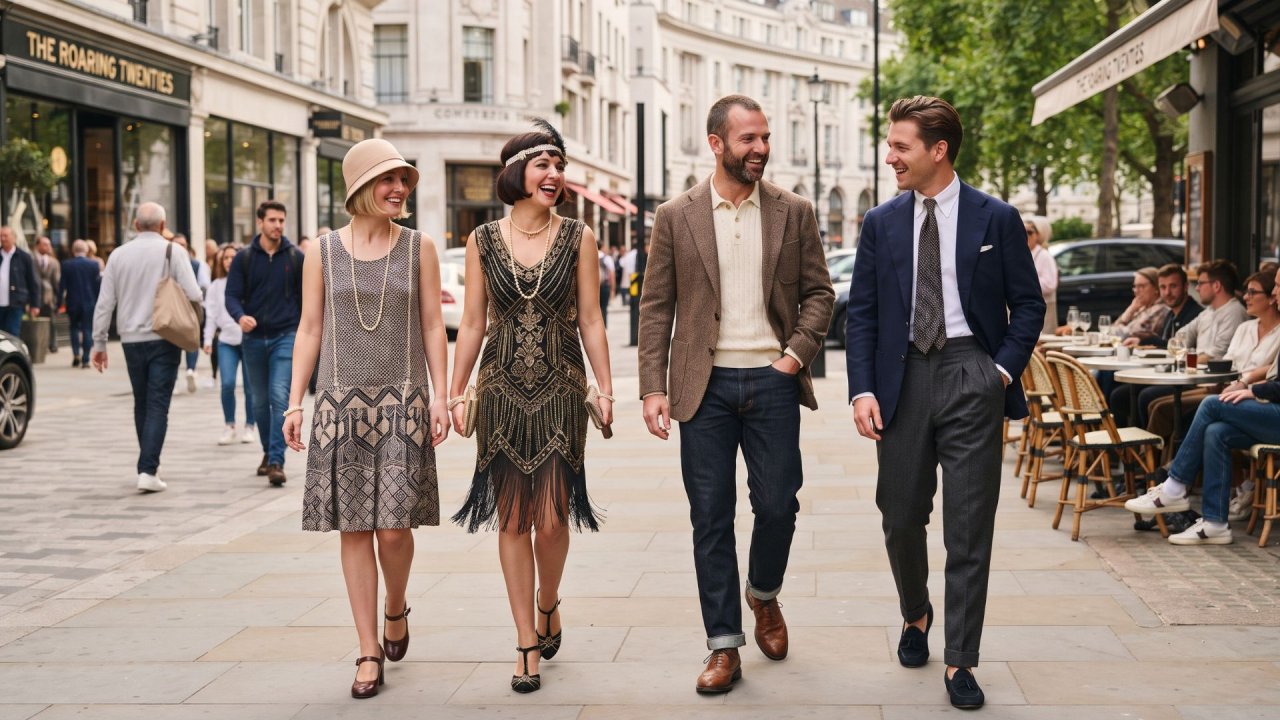
The flapper became the symbol of the decade: a young woman with bobbed hair, a loose dress, and a spirit of independence. The style is known for straight lines, dropped waists, and playful details.
Dropped-Waist Dresses
Dresses sat low on the hips rather than at the natural waist. This created the long, straight line most associated with the 1920s.
Beaded and Embellished Evening Dresses
Evening wear used beads, sequins, fringe, and embroidery that caught the light while dancing. Many were made in lightweight fabrics, and the decoration added considerable weight.
Day Dresses
Daytime dresses were simpler, often in cotton, wool, or silk blends, with modest trims, pleats, and soft collars.
Coats and Wraps
Coats were often straight and roomy, with fur or fabric collars. Evening wraps were lavish, sometimes embroidered or trimmed.
Skirts and Blouses
Pleated skirts, soft blouses, and cardigans gave a more casual, practical option for day wear.
Undergarments
Underwear and foundation garments became lighter and less structured, in keeping with the straighter silhouette.
1920s Fashion for Men
The Suit
Suits were widely worn. Jackets were often structured but comfortable, and trousers could be wide at the leg. Three-piece suits, with a waistcoat, were common.
Oxford Bags
Very wide trousers became popular with younger men, especially in the later part of the decade.
Shirts and Collars
Shirts often had detachable or stiff collars. Patterned and striped shirts appeared alongside plain ones.
Knitwear and Sportswear
Sweaters, cardigans, and knitted vests became fashionable, particularly for golf and leisure. Knickerbockers, or plus fours, were popular for sport.
Hats and Outerwear
Hats were an essential part of the outfit, including the flat cap, fedora, and homburg. Overcoats were long and practical.
Fabrics and Materials
Silk and Silk-Like Fabrics
Used for evening dresses, scarves, and blouses. They gave softness and shine.
Chiffon and Georgette
Light, flowing fabrics that moved well while dancing.
Velvet and Satin
Common in evening wear and wraps, adding richness and depth.
Cotton and Wool
Practical day fabrics for dresses, skirts, suits, and sportswear.
Rayon (Artificial Silk)
Became increasingly popular as an affordable alternative to silk.
Lace and Beadwork
Used for trims, panels, and full dresses.
Colors and Patterns
Colors
Soft pastels were popular for day wear, while evening wear used black, gold, silver, deep jewel tones, and shimmering metallics. Menswear stayed mostly in muted browns, greys, navy, and charcoal.
Patterns
Geometric designs, stripes, checks, and Art Deco motifs reflected the modern spirit of the era. Florals and delicate embroidery also appeared on day dresses and accessories.
Accessories That Defined the Decade
- Cloche hats: close-fitting hats pulled low over the forehead.
- Long beaded necklaces and pearls: worn layered or looped.
- Headbands and feathers: popular for evening and dancing.
- Gloves: from short day gloves to long evening gloves.
- T-bar and Mary Jane shoes: strapped shoes that stayed on while dancing.
- Handbags and clutches: small, often beaded or embroidered.
- Cigarette holders and fans: associated with glamorous evening looks.
- For men: pocket squares, ties, braces, flat caps, and brogues.
How to Wear 1920s Style Today
You do not need a full costume to enjoy the look. A few well-chosen details are enough.
Choose One Statement Piece
Pick a beaded top, a drop-waist dress, or a velvet jacket, and keep the rest of the outfit modern.
Use Straight, Relaxed Shapes
Loose silhouettes and mid-length hems echo the era without feeling like fancy dress.
Add Period Accessories
Long pearls, a headband, or a structured clutch create the mood instantly.
Mix Textures
Combine silk or satin with knitwear, or velvet with denim, for a modern take.
Keep Makeup and Hair Subtle
Soft waves, a bob, or a simple finger-wave style can complete the look without being theatrical.
1920s-Inspired Outfit Ideas
Evening Look
A beaded or sequin dress with a simple wrap, long necklace, and low heels.
Smart Day Look
A drop-waist or straight dress with a cardigan and Mary Jane shoes.
Modern Mix
A silky blouse with high-waisted trousers, pearls, and a structured bag.
Menswear Look
Tailored trousers, a waistcoat, a patterned shirt, and a flat cap.
Party or Themed Event
Fringe dress or sharp three-piece suit, with a headband, gloves, and statement jewelry.
Original 1920s Pieces vs. Reproductions
Original 1920s Clothing
Garments made in the 1920s are now around 100 years old, which means they are generally considered antique rather than vintage. They are rare, delicate, and often fragile.
Why Originals Are Rare
Fabrics such as silk and rayon deteriorate with age. Beading can become heavy and put strain on the fabric, and many items were worn heavily, altered, or discarded over the decades.
Reproductions and 1920s-Inspired Clothing
Newly made pieces in 1920s style are widely available. They are easier to wear, easier to clean, and far more affordable. They are not original, and should be described honestly as reproduction or inspired.
How to Tell the Difference
- Fabric and condition: very old fabric often shows aging that is difficult to fake.
- Construction: look at seams, hand finishing, fastenings, and linings.
- Labels and tags: compare with reliable references for the period.
- Fastenings: older closures often differ from modern zips and snaps, though repairs may have changed them.
- Price: a genuine piece is usually priced accordingly. Be careful with items that seem too good to be true.
For valuable or very fragile pieces, ask for a specialist’s opinion or buy from sellers who can explain how they date their stock.
What to Check Before Buying Original 1920s Clothing
- Fabric strength: look for shattering silk, splits, and weak seams.
- Beadwork: missing beads, loose threads, and stress around shoulders.
- Stains and discolouration: especially underarms and hems.
- Alterations: check what has been changed, added, or replaced.
- Smell: stored garments may hold odours that are hard to remove.
- Fit: original sizes were different, so rely on measurements.
- Handling needs: very delicate items may be display pieces rather than wearable.
How to Care for 1920s and 1920s-Style Clothing
Original Pieces
- Avoid regular washing. Consult a specialist conservator or cleaner for fragile garments.
- Store flat or well padded, and avoid hanging heavy beaded items, which can stretch the fabric.
- Keep away from direct sunlight, damp, and plastic that traps moisture.
- Handle gently, and avoid wearing delicate items for long periods.
Modern Reproductions
- Check the care label.
- Hand wash delicate or beaded items in cool water with mild detergent.
- Air dry flat or on a padded hanger.
- Avoid high heat and the dryer.
- Store in a breathable garment bag.
Where to Find 1920s Fashion
- Specialist antique and vintage dealers: the best place for genuine pieces, with knowledgeable sellers.
- Online vintage and reproduction stores: wide choice, clear photos, and measurements. Royals Vintage offers carefully selected vintage pieces with clear descriptions, so shoppers can buy with confidence.
- Vintage fairs and auctions: good for rare items, though prices can rise.
- Costume and reproduction makers: good for wearable, affordable 1920s-style clothing.
- Modern brands with 1920s-inspired collections: useful for everyday wear with a hint of the era.
Common Mistakes With 1920s Fashion
- Wearing a full costume instead of one statement piece.
- Confusing reproductions with original antique clothing.
- Ignoring fabric fragility on genuine pieces.
- Trusting size labels instead of measurements.
- Overloading accessories.
- Washing delicate beaded items at home.
- Paying antique prices for modern copies.
FAQ's
What was 1920s fashion known for?
Loose, straight silhouettes, dropped waists, shorter hemlines, beaded evening dresses, cloche hats, and sharp menswear.
What did flappers wear?
Flappers wore drop-waist dresses with knee-length hems, beads, headbands, and cloche hats, often in light fabrics for dancing.
What did men wear in the 1920s?
Men wore suits, waistcoats, wide trousers, patterned shirts, ties, and hats such as flat caps and fedoras. Knitwear and plus fours were popular for sport.
Is 1920s clothing considered vintage or antique?
Clothing from the 1920s is around 100 years old, so it is generally considered antique, though many sellers still use the word vintage.
How can I wear 1920s fashion today?
Choose one statement piece such as a beaded top or drop-waist dress, add period accessories, and keep the rest of your outfit modern.
How do I know if a 1920s piece is original?
Check fabric aging, construction, labels, and fastenings together, and buy from sellers who can explain how they date their items.
How do I clean 1920s clothing?
Original pieces are fragile and should be cleaned by a specialist. Modern reproductions can usually be hand washed following the care label.
Where can I buy 1920s-style clothing?
You can buy from specialist dealers, online vintage and reproduction stores, vintage fairs, and brands with 1920s-inspired collections.
Conclusion
1920s fashion remains popular because it feels glamorous, playful, and full of movement. Whether you collect rare original pieces or wear a reproduction dress to a party, the key is balance: choose one statement item, add period accessories, and keep the rest modern. Understand what is original and what is inspired, care for delicate fabrics properly, and enjoy a decade that still shapes how we dress.
Ready to find your next piece? Explore the collection at Vintike and discover vintage clothing selected for style and quality.