90s Mens Fashion: Key Styles, Signature Pieces and How to Wear Them Today
90s Mens Fashion: Key Styles, Signature Pieces and How to Wear Them Today
The 1990s were a decade of relaxed rules. After the loud shapes of the 1980s, menswear became looser, simpler, and more individual. Baggy jeans, heavy flannels, big sweatshirts, and sporty layers defined a casual look that still feels easy to wear, which is why 90s mens fashion is one of the most searched retro styles today.
This guide focuses only on 1990s menswear: the main styles of the decade, the signature pieces, the fits and fabrics, how to build modern outfits, and how to buy and care for original 90s clothing.
Read More: https://vintike.com/blog/vintage-clothing/stonewash-jeans
What Defined 90s Mens Fashion?
Comfort Over Formality
Clothes became looser and more practical. Fit was relaxed, and everyday wear took priority over dressing up.
Subcultures Shaped Style
Music, skateboarding, sport, and street culture all influenced what men wore, and different groups had very different looks.
Casual Became Normal
Sportswear, denim, and sweatshirts moved from weekend wear into daily life, and even into many workplaces.
Simple and Minimal Looks Grew
Alongside baggy streetwear, a cleaner, plainer style also emerged, with neutral colours and simple tailoring.
The Main 90s Menswear Styles
Grunge
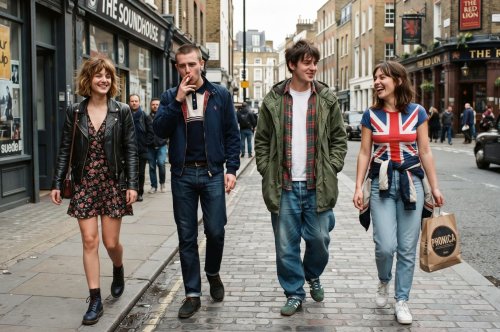
Layered, worn-in, and deliberately undone. Flannel shirts, faded tees, ripped or relaxed jeans, chunky boots, and knit beanies. Dark and muted colours dominate.
Hip-Hop and Streetwear
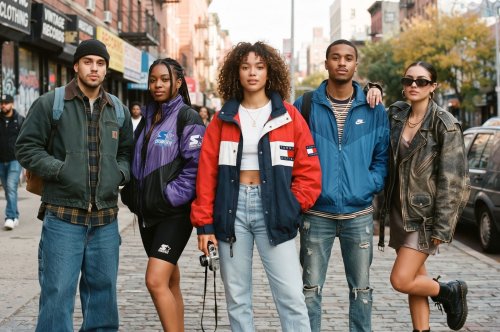
Oversized jeans, big logo sweatshirts, bold colour-block jackets, baggy tees, and chunky trainers. Loose proportions and strong graphics.
Skate Style
Baggy jeans or work trousers, graphic tees, hoodies, and flat-soled trainers. Practical, durable, and easy to move in.
Sportswear and Track Style
Track jackets, windbreakers, football shirts, and tracksuit tops worn as everyday clothing. Bright colour blocking and stripes.
Preppy and Smart Casual
Polo shirts, rugby shirts, knitted jumpers, chinos, and neat jackets in clean colours.
Minimalist and Tailored
Slim, plain tailoring, simple knits, and neutral palettes. Understated and sharp.
Workwear and Outdoor
Heavy jackets, canvas trousers, fleeces, and boots. Practical clothing adopted as everyday style.
Signature 90s Mens Clothing
Baggy and Relaxed Jeans
Wide through the leg and often worn low on the hips. Stonewash and mid-blue washes were common.
Oversized T-Shirts and Graphic Tees
Large, boxy tees with bold prints, slogans, or faded graphics.
Flannel and Checked Shirts
Heavy cotton plaids, often worn open over a tee or tied around the waist.
Heavy Sweatshirts and Hoodies
Thick cotton fleece, often with large embroidered or printed designs.
Track Jackets and Windbreakers
Nylon shell jackets with colour blocking, stripes, and zip pockets.
Denim Jackets
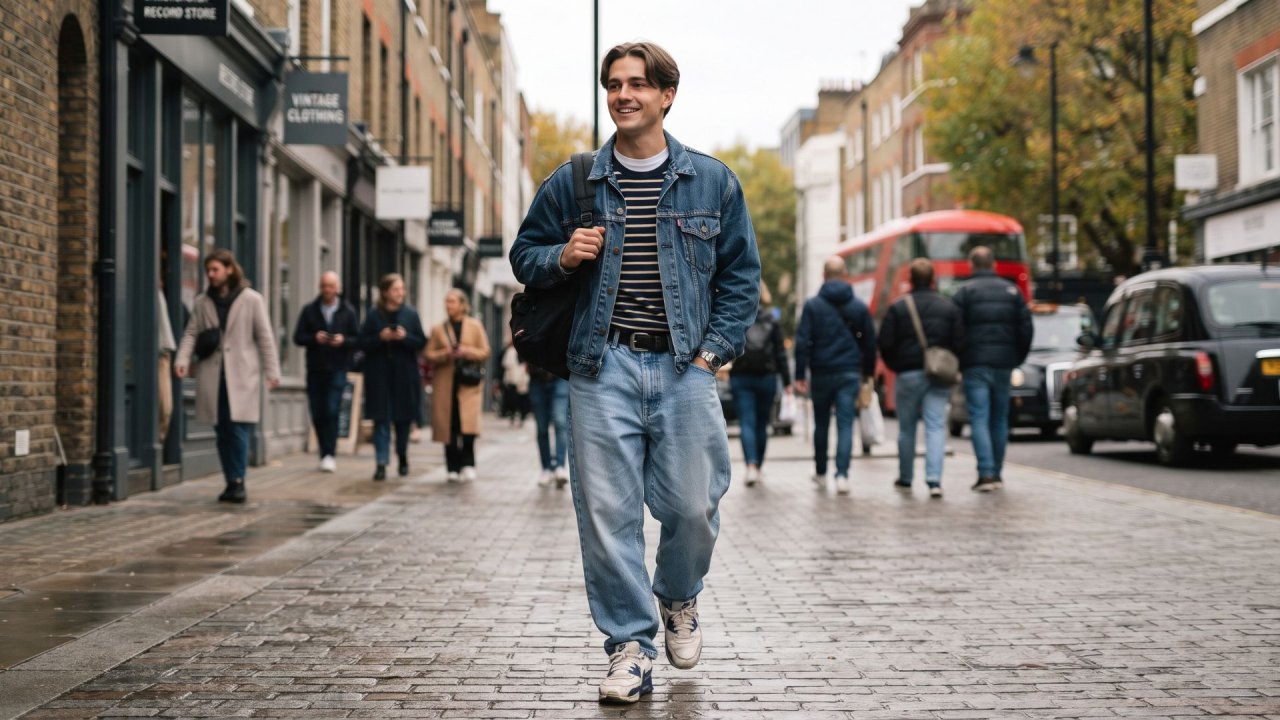
Boxy or oversized, in light, mid, or dark washes, worn over tees and hoodies.
Puffer and Fleece Jackets
Chunky outerwear for cold weather, often in bold colours.
Polo and Rugby Shirts
Collared sports shirts in stripes and strong colours.
Cargo Trousers and Shorts
Loose utility pockets and relaxed fits.
Knitwear
Chunky jumpers with patterns or colour blocks, and plainer crew necks for minimal looks.
Leather and Bomber Jackets
Short, boxy jackets in leather, nylon, or suede finishes.
Accessories
Baseball caps, beanies, bucket hats, chain wallets, watches, and backpacks.
90s Colours, Fabrics and Patterns
Colours
Denim blue, black, grey, forest green, and burgundy dominate. Bright primaries, teal, purple, and neon accents show up in sportswear and streetwear.
Fabrics
Heavy cotton, fleece, denim, flannel, nylon, and polyester sportswear fabrics.
Patterns
Plaids, stripes, colour blocking, bold logos, abstract graphics, and faded band-style prints.
90s Fits and Proportions
Loose and Boxy Tops
Shoulders often dropped, with roomy bodies and sleeves.
Wide Legs
Trousers and jeans were cut generously, sometimes breaking over the shoes.
Layering
Tees under flannels, hoodies under jackets, and long sleeves under short sleeves were common.
Balance Today
Modern wearers often keep one oversized piece and balance it with something slimmer. This keeps the 90s feel without looking shapeless.
How to Wear 90s Mens Fashion Today
Choose One 90s Hero Piece
A track jacket, flannel, or oversized sweatshirt can lead the outfit while the rest stays simple.
Update the Proportions
Pair a baggy jean with a fitted or regular top, or an oversized top with straight trousers.
Keep Colours Controlled
Use neutrals as the base and let one 90s colour or graphic stand out.
Mix With Modern Basics
Clean trainers, plain tees, and simple outerwear keep the look current.
Focus on Fit and Condition
Even relaxed clothes should look intentional. Check shoulders, sleeve length, and hems.
90s Outfit Ideas for Men
Casual Everyday Look
An oversized graphic tee, straight or baggy jeans, and clean trainers.
Grunge-Inspired Look
A flannel shirt over a faded tee, relaxed jeans, and boots.
Streetwear Look
A colour-block jacket or heavy sweatshirt, baggy jeans, and chunky sneakers with a cap.
Sporty Look
A track jacket, plain tee, relaxed trousers, and simple trainers.
Smart Casual Look
A rugby or polo shirt with chinos and a neat jacket.
Layered Winter Look
A fleece or puffer jacket over a hoodie, with relaxed jeans and boots.
Minimal Look
A plain knit, straight trousers, and a simple coat in neutral tones.
Original 90s vs. 90s-Inspired Clothing
Original 90s
Made in the decade, with period labels, fabrics, and construction. Many pieces are now around 30 years old, so they count as true vintage.
90s-Inspired
Made recently to copy the look, often with modern fabrics and sizing. They should be described honestly as inspired or retro, not vintage.
How to Tell the Difference
- Labels and tags: compare logo style, font, and layout with reliable references.
- Fabric feel: older cotton and fleece often feel softer and more worn.
- Construction: stitching, zips, and hardware should suit the period.
- Print condition: natural cracking and fading are common on genuine older graphics.
- Stretch: many older pieces have less stretch than modern clothing.
- Price: a rare piece priced like new fast fashion needs more questions.
What to Check Before Buying 90s Clothing
- Collars, cuffs and underarms: stains and fraying show here first.
- Hems on jeans and trousers: drag damage is common on baggy pairs.
- Crotch and thigh areas on denim: thinning and seam splits.
- Zips and snaps on jackets: test every one.
- Nylon and shell fabrics: look for cracking, stickiness, or tears.
- Prints and logos: note peeling, cracking, and fading.
- Smell: stored clothing can hold musty or smoky odours.
- Shrinkage or stretching: compare measurements with the listing.
Light fading and soft wear are part of the appeal. Holes, split seams, and deep stains lower value.
How to Choose the Right Size
Use Measurements, Not Labels
Sizing has changed since the 1990s, and many pieces were cut roomy on purpose.
Measurements That Matter
- Tops and jackets: chest (pit to pit), shoulder width, sleeve length, and body length.
- Jeans and trousers: waist, rise, thigh, inseam, and leg opening.
Know the Intended Fit
Check whether the listing says oversized, boxy, or regular. Compare with a similar item you already own.
If You Are Between Sizes
Choose the larger size for relaxed styles, since 90s looks are meant to be roomy.
How to Care for 90s Clothing
- Check the care label if it is readable.
- Wash in cold water on a gentle cycle with mild detergent.
- Turn prints and logos inside out.
- Avoid high heat and the dryer, especially for nylon and printed items.
- Air dry flat or on a padded hanger.
- Wash flannel and denim less often to keep colour and shape.
- Repair loose buttons and small tears early.
- Store in a cool, dry place away from direct sunlight.
Where to Buy 90s Mens Fashion
- Online vintage stores: clear photos, measurements, and condition notes. Vintike focuses on carefully selected vintage pieces with clear descriptions, so shoppers can buy with confidence.
- Resale apps and marketplaces: large variety and competitive prices. Check reviews and ask for close-ups of labels and flaws.
- Vintage fairs and markets: try pieces on and inspect them in person.
- Thrift and charity shops: affordable, though selection varies and measurements are rarely given.
- Brands with 90s-inspired collections: useful for modern sizing and new condition.
Tips for Buying 90s Clothing Online
- Read the full description, including fabric, size, and condition.
- Compare measurements with a similar piece you own.
- Zoom in on labels, prints, zips, and wear areas.
- Ask for extra photos of any flaw or unclear area.
- Check delivery time and the returns policy.
- Start with one or two versatile pieces, such as a flannel or a sweatshirt.
Common Mistakes With 90s Mens Fashion
- Wearing too many oversized pieces at once.
- Buying by size label instead of measurements.
- Ignoring hem and crotch wear on jeans.
- Paying vintage prices for 90s-style copies.
- Washing nylon and printed items on high heat.
- Copying a full decade look instead of building your own.
- Mixing several loud patterns without a plan.
Frequently Asked Questions About 90s Mens Fashion
What was 90s mens fashion known for?
Baggy jeans, oversized tees, flannel shirts, heavy sweatshirts, track jackets, and a relaxed, casual approach to dressing.
What did men wear in the 90s?
Men wore loose denim, graphic tees, flannels, hoodies, sports jackets, polos, and chunky trainers, with different looks for grunge, hip-hop, skate, and preppy styles.
How do I dress 90s style today?
Pick one 90s hero piece, balance proportions, keep colours controlled, and mix it with modern basics.
Is 90s clothing considered vintage?
Yes. Clothing is generally considered vintage when it is at least 20 years old, so original 1990s pieces qualify.
What are the best 90s pieces to start with?
A flannel shirt, an oversized sweatshirt, a track jacket, and a pair of straight or relaxed jeans are easy to style and widely available.
How do I tell if a piece is genuine 90s?
Check the label, fabric, construction, print wear, and stretch together, and buy from sellers who can explain how they date their items.
What size should I buy in 90s clothing?
Use the garment’s measurements and compare them with a similar item you own. Many pieces are cut roomy on purpose.
Where can I buy 90s mens fashion online?
You can buy from online vintage stores, resale apps, and marketplaces. Choose sellers who show clear photos, measurements, and honest condition notes.
Conclusion
90s mens fashion is relaxed, versatile, and full of character. Choose the style that suits you, start with one hero piece, balance the proportions, and keep the rest of the outfit simple. Check labels, wear areas, and measurements when buying original pieces, and care for them gently so they last.
Ready to find your next piece? Explore the collection at Vintike and discover vintage clothing selected for style and quality.